Baharat Apple Butter
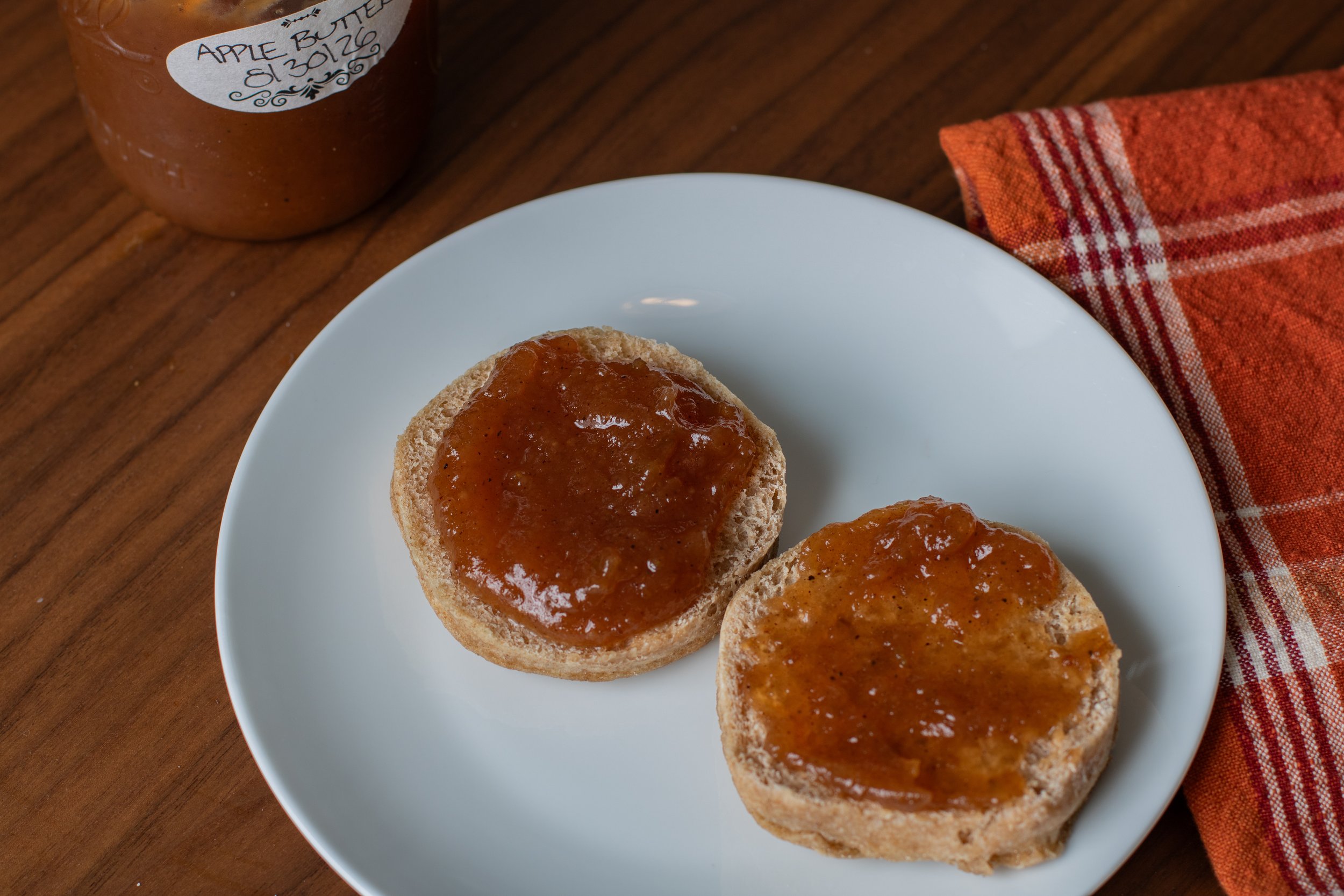
A Different Kind of Spiced Apple Butter
There are few things that signal the beginning of fall quite like a kitchen filled with the smell of apples and warm spices. This apple butter starts with plenty of tart apples and apple cider, which are cooked together before being puréed and slowly concentrated in the oven.
Instead of traditional apple pie spice, I use sweet baharat. Its warm, aromatic spices are beautiful with apples and give the finished butter a little more depth without losing everything we love about classic apple butter.
I already have a Sweet Baharat recipe on the blog, so this is a perfect place to cross-link it. You can absolutely use a purchased baharat instead, but read the ingredients carefully. Many traditional savory baharat blends contain cumin, which is not what we're looking for here. Choose a sweet, baking-friendly blend without cumin or make the sweet version linked above.
The technique is also a little different from simply simmering apple butter on the stovetop all afternoon. Once the apples are tender, they're blended until smooth and spread into a shallow baking pan. Finishing the purée in the oven allows moisture to evaporate steadily, transforming it from applesauce into something darker, richer, and noticeably more buttery in texture.
Ingredients
About 4 pounds (1,816 g) tart apples, peeled, cored, and chopped
4 cups (985 g) apple cider
2½ tablespoons (40 g) fresh lemon juice
4 cups (800 g) granulated sugar
2½ teaspoons (5 g) Sweet Baharat
Method
Combine the chopped apples, apple cider, lemon juice, sugar, and sweet baharat in a large, heavy-bottomed pot.
Bring the mixture to a boil over medium-high heat, stirring occasionally to dissolve the sugar. Reduce the heat and simmer until the apples are completely tender and beginning to break apart.
Remove the pot from the heat and carefully purée the mixture directly in the pot with an immersion blender. Continue blending until completely smooth with no large pieces of apple remaining.
Preheat the oven to 300°F (150°C).
Pour the apple purée into a rimmed half-sheet pan and spread it into an even layer. The large surface area is important here—it allows moisture to evaporate much more efficiently than it would in a deep baking dish.
Bake for about 1 hour, carefully stirring the apple butter every 15 minutes. Be sure to scrape the edges and corners back into the mixture each time you stir so everything cooks evenly.
As it bakes, you'll notice the texture begin to change. What starts as a relatively loose, wet purée will gradually darken, thicken, and take on the smooth, spreadable consistency we associate with apple butter.
Remove from the oven when the apple butter is noticeably thicker and holds its shape on a spoon. Keep in mind that it will continue to thicken as it cools.
Transfer to clean containers and allow to cool before refrigerating.
Storage
Store the finished apple butter in airtight containers in the refrigerator.
For longer storage, it can also be frozen in freezer-safe containers. Leave a little room at the top of each container to allow for expansion.
This recipe is intended as a refrigerator or freezer apple butter, not a shelf-stable canning recipe.
Cook's Note: Choosing Your Baharat
Baharat simply means "spices," and the ingredients in a baharat blend can vary considerably. Many blends are designed for savory cooking and contain spices such as cumin, which isn't the flavor we're after in this apple butter.
Use the Sweet Baharat blend from the blog for the flavor I intended when developing the recipe. If you buy a prepared blend, check the ingredient label and look for one built around warm, sweet spices rather than cumin-forward savory spices.
Cook's Note: Why Finish Apple Butter in the Oven?
Finishing the apple butter in the oven does more than concentrate the apples—it gives us a gentler, more hands-off way to achieve the proper texture. Reducing the purée entirely on the stovetop means standing over the pot and stirring frequently to keep the thickening apple butter from catching and scorching on the bottom.
The oven provides a more gentle, indirect heat while the wide surface area of the sheet pan allows excess moisture to steadily evaporate. You’ll still want to stir about every 15 minutes, but there’s no need to constantly tend the pot. The result is a deeply concentrated, smooth, buttery texture with far less risk of scorching.
Don't judge doneness solely by the one-hour cooking time. Texture is the better indicator. You're looking for the transition from a loose applesauce-like purée to something darker, richer, thicker, and distinctly spreadable.